
AI DATA CENTERS & ENERGY CORRIDORS

WHEN COMPUTE MEETS THE RIGHT OF WAY, LAND FRICTION COMPOUNDS FAST
The rush to build AI data centers has changed the land conversation. Not because land suddenly got scarce, but because timelines did.
Compute wants power now. Not five years from now. Not after the next regional transmission upgrade. Now. And that urgency is colliding head-on with the slow, human pace of energy corridors that still move one parcel at a time.
From a distance, it looks like a coordination problem between utilities, developers, and grid planners. In the field, it feels different. It feels like multiple teams showing up with different maps, different messages, and different clocks, all expecting landowners to reconcile it for them.
This is where land conflicts converge. And where schedules quietly start slipping.
WHEN THE DATA CENTER SHOWS UP FIRST
A common pattern is emerging.
A data center site gets secured early. Often very early. The parcel is large, flat, and close to fiber. Power is “nearby” on paper. The development team assumes the transmission or distribution upgrade will follow the normal path, just accelerated.
But corridors do not accelerate just because the endpoint is expensive.

The moment a new line, tap, or substation expansion is proposed, the land campaign resets the clock. New parcels. New landowners. New questions. And in many cases, landowners hearing about the project for the first time are not hearing it from the same voice.
One landowner hears from a data center representative asking about access. Another hears from a transmission consultant explaining a future easement. A third hears from a neighbor who heard something from a survey crew. None of the messages fully line up. All of them feel incomplete.
That is not a technical failure. It is a field coordination failure.
CORRIDORS ARE NOT ABSTRACT INFRASTRUCTURE
Energy corridors are often treated as background systems. Lines on a regional plan. Capacity studies. Interconnection queues. But on the ground, a corridor is a negotiation with memory.
Many of the parcels needed for AI-driven power upgrades already carry legacy infrastructure. Old gas lines. Existing transmission. Distribution laterals installed decades ago. Each of those left a mark on the landowner relationship.
Some were handled well. Some were not.
When a new corridor or expansion comes through tied to a data center, landowners do not separate the projects. They connect them. To them, it is all one thing. Another company. Another easement. Another promise about restoration.
If the message is fragmented, trust erodes fast.
THE COMPOUND FRICTION PROBLEM
What makes AI data centers different is not just load size. It is the stacking of land impacts.
A single project can involve:
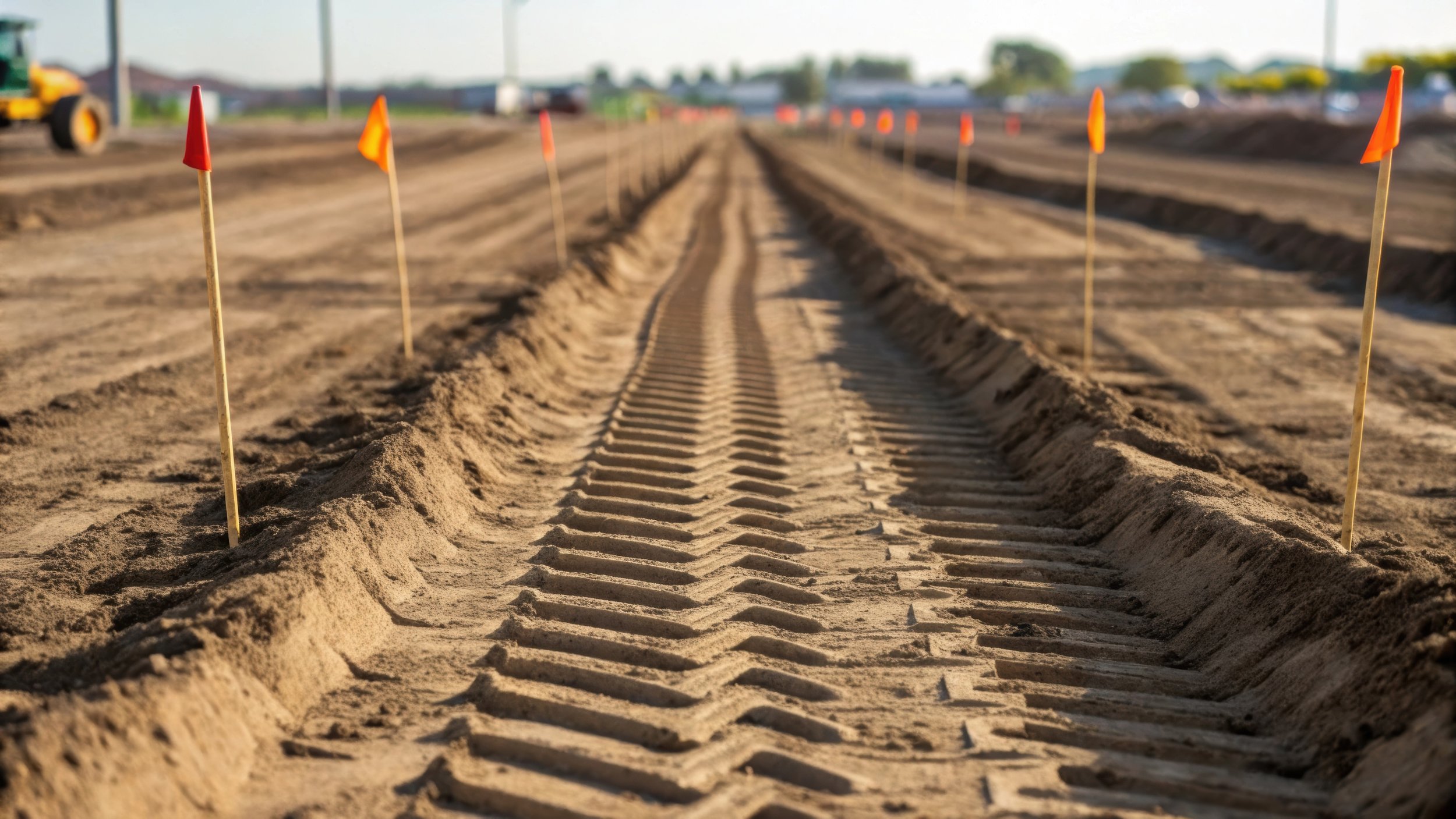
A large site control footprint for the facility itself
One or more new or expanded transmission corridors
Temporary access roads and staging areas
Fiber routes following different alignments
Construction schedules that overlap but are managed by different teams
Each element may be reasonable on its own. Together, they feel overwhelming to landowners if not handled carefully.
The friction compounds when land agents are working off different assumptions. One team promises flexibility. Another emphasizes schedule. One talks about temporary impacts. Another hands over permanent easement language without context.
None of this is malicious. It is what happens when land is treated as a downstream task instead of shared infrastructure.
A FIELD EXAMPLE, WITHOUT THE NAMES
In one composite scenario we see often, a data center option is executed with strong local support. The landowner is on board. The community is cautiously optimistic.
Months later, survey crews appear on adjacent parcels for a transmission upgrade. Landowners are surprised. They assumed the data center was self-contained. Now they are hearing about towers, clearing limits, and access roads.
The data center developer assumes the utility has it covered. The utility assumes the corridor team will handle outreach. The corridor team assumes prior conversations happened.
They did not.
What follows is not an explosion. It is worse. A slow drag. Calls returned late. Meetings postponed. Survey access delayed. Legal reviews that take just long enough to miss a window.
On paper, nothing failed. In reality, trust was never fully built.

THE LESSON HIDING IN PLAIN SIGHT
AI data centers are forcing energy corridors into the spotlight. They are exposing a truth land teams have known for years.
Site control is the schedule.
Not permits. Not steel. Not transformers. The ability to secure, maintain, and coordinate land access across multiple parties is what determines whether these projects move at the speed developers expect.
When land is fragmented, messaging must be unified. When impacts stack, explanations must be honest and complete. When multiple teams touch the same landowners, consistency matters more than speed.

FIELD NOTES
Treat corridors and sites as one land story.
Even if contracts and ownership are separate, landowners experience them as a single project. Align messaging early.
Sequence outreach, not just construction.
Who speaks first matters. Early conversations shape how every later request is received.
Assume legacy memory.
Prior infrastructure work, good or bad, is part of the negotiation whether you acknowledge it or not.
Unify agent guidance.
Land agents working adjacent scopes need shared assumptions on compensation, restoration, and tone.
Restoration is credibility, not cleanup.
AI projects attract scrutiny. How land is left behind will travel faster than any press release.
CLOSING REFLECTION
The convergence of AI data centers and energy corridors is not a temporary phase. It is the new baseline.
These projects will only get larger. The power needs will only intensify. And the land will still belong to people who care deeply about how they are treated.

The teams that succeed will not be the ones with the fastest compute or the biggest balance sheets. They will be the ones who recognize that trust is the real connective tissue between data centers and the grid.
Get the land right, and the rest can follow.